Why is SSD better than HDD?
2022-04-12
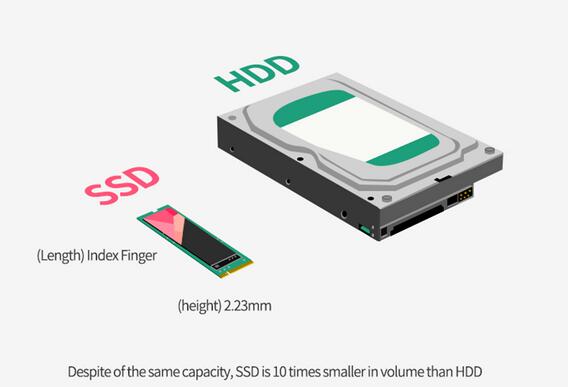
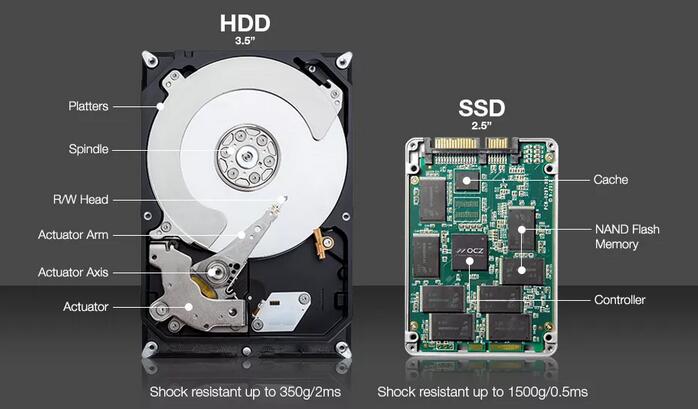
In principle, HDD reads and writes data from the rotating disk. It must be powered on and off during data processing, while SSD stores the data in the integrated circuit with small size and no rotating disk.
SSDs without rotating disk constraints can be as small as stamps and can have different storage capacity. Both of these characteristics make SSDs more flexible for small devices such as mobile phones or wireless cameras. Similarly, since there are no disks for data access, SSDs do not require much energy or time to start and process data. Therefore, they consume less power. This also reduces heat dissipation, thereby reducing bottlenecks in storing data.
However, SSD is still relatively more expensive. HDDs are still a cost-effective option for some devices. However, in the long run, the cost difference may not be so large for enterprise SSD manufacturers. Market price information shows that the total cost difference between the two storage products used in the data center is very small. By mid-2020, the HDD replacement rate is about 15%, and the price gap is about 9 times.
In addition, the lower power consumption of SSD (60% lower than HDD) is very valuable for environmental protection. If every data center in the world exclusively uses SSD, the global carbon dioxide emissions will be greatly reduced.
At present, many technology companies are trying to reduce the carbon footprint of technology products, while innovating to meet demand and pave the way for greater breakthroughs.
Overall, every effort to reduce power consumption and carbon emissions at the component level has a huge impact. As more connected products and more online services become mainstream, better management of the energy used to process data will become more important.
SSDs without rotating disk constraints can be as small as stamps and can have different storage capacity. Both of these characteristics make SSDs more flexible for small devices such as mobile phones or wireless cameras. Similarly, since there are no disks for data access, SSDs do not require much energy or time to start and process data. Therefore, they consume less power. This also reduces heat dissipation, thereby reducing bottlenecks in storing data.
However, SSD is still relatively more expensive. HDDs are still a cost-effective option for some devices. However, in the long run, the cost difference may not be so large for enterprise SSD manufacturers. Market price information shows that the total cost difference between the two storage products used in the data center is very small. By mid-2020, the HDD replacement rate is about 15%, and the price gap is about 9 times.
In addition, the lower power consumption of SSD (60% lower than HDD) is very valuable for environmental protection. If every data center in the world exclusively uses SSD, the global carbon dioxide emissions will be greatly reduced.
At present, many technology companies are trying to reduce the carbon footprint of technology products, while innovating to meet demand and pave the way for greater breakthroughs.
Overall, every effort to reduce power consumption and carbon emissions at the component level has a huge impact. As more connected products and more online services become mainstream, better management of the energy used to process data will become more important.